
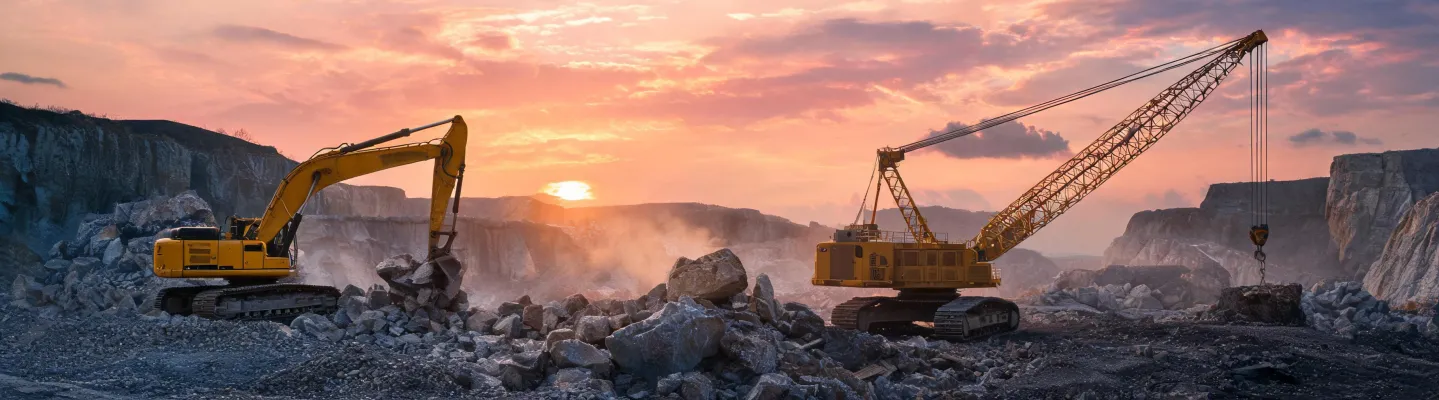
The call about the 300-ton Liebherr crane
I got the call at 2:47 pm on a Thursday. A 300 ton Liebherr crane had just been unloaded at our yard, and the sales manager needed my release before 6 pm. A foundation contractor was going to start rigging at 5:30 the next morning.
I'm a quality and brand compliance manager for a heavy-equipment distributor. I don't sell cranes, and I don't design them. I review every delivery that lands in our remit—roughly 200 items a year, from wire rope reels to complete cranes. I rejected 14% of first deliveries in 2024 for specification or documentation mismatches. Most were small. This one was not.
The crane looked correct at first. The decal package was right, the tires were new, the operator's manual was in the cab, and the load chart binder was in the cab too. That is why I didn't start with the boom. I started with the load path.
One serial number did not match
My checklist starts underneath the crane. On a telescopic machine, the load path goes through the hook block, the wire rope, the boom head, and the drum. The main hook block on that unit looked brand-new. Its label said 300 t capacity. Liebherr's technical data for this model had been in our files since we ordered it, and the carrier specifications all matched the crane truck specifications in the contract.
Then I checked the serial number on the hook block against the certificate that came with the machine.
The certificate said 65528. The block said 65028.
One digit. My first thought? Maybe I had written it down wrong. I wiped the stamp, looked again, and got the same number.
The sales manager said it was probably a typo in the packing list. It could have been. Honestly, I don't know. What I do know is that a hook block is a load-bearing component. If it cannot be traced to its original test record, I cannot prove that it was never overloaded or modified. The word probably is not a lifting plan.
ASME B30.5, the mobile crane safety standard, is one of the documents I lean on. It does not allow me to guess. The rated capacity of a crane only means something when the configuration matches the manufacturer's instructions. A 300 t label on a block tells me what it was designed to do. The certificate tells me who built it, when it was tested, and how it came to my yard. Without that record, I cannot put that block above a person's head.
So I held the crane.
That decision did not make me popular for the next two days.
The supplier pushed back. The customer was waiting. The rental clock was running. And the strongest argument I heard was that nobody would ask about the hook block serial number. Maybe not. But the load chart doesn't care.
It turned out that the block on the crane was a replacement from another depot. Same visual appearance, same manufacturer, but no original certificate. It was probably an honest inventory mistake. I never got a full explanation. In the end, the correct block was shipped to us, we ran a load test, and the crane left four days late.
The delay cost us roughly $22,000 in standby, freight, and re-scheduling. It also delayed a client—which, to me, is the worst part of any quality failure.
No hoist wholesale shortcut without documentation
While the replacement block was being arranged, our purchasing team asked me to approve a hoist package for a different order. They wanted to source the hoist wholesale to recover the schedule. I wasn't against the idea—hoist wholesale purchases can remove layers and save money. But I told them I needed the same proof I had asked for on the crane.
The first hoist wholesale supplier sent a quote, then a photo, then another quote. When I asked for the load test certificate to be attached before shipment, they said it would be sent after shipping. I stopped the order.
To me, that simple reply is a red flag. After-shipping certification is not certification. It is a promise on top of a problem.
We bought the hoist from a different supplier for a few thousand dollars more. They uploaded the test certificate with the same serial number before we paid the invoice. I signed it off in one day.
The most frustrating part of this recurring argument is that it is preventable. You'd think that after the hook block incident, nobody would question the paperwork rule. But pressure returns as soon as a deadline appears.
What I would put in a ton crane distributor buying guide
Most buyers begin with the crane truck specifications, and I understand why. Axle configuration, boom length, counterweight, travel weight—all of that matters. But the miss I described above had nothing to do with the truck. The machine conformed to every crane truck specification on the order. The problem was hanging underneath the boom.
If you write your own ton crane distributor buying guide, start with traceability, not with spec sheets. The load path is where I would place a hard stop: hook block, wedge socket, wire rope, and hoist drum must have serial numbers that match their certificates. If not, the deal is not ready for release.
There is a reason I don't try to be the expert on everything. When a customer asked me later to certify a tower crane on the same site, I said that was outside my scope, and I gave them the name of a certified company that handles tower cranes. That boundary is not a weakness. A vendor who tells you we can handle everything has not yet found the edge of its own knowledge.
Bottom line: A 300 ton Liebherr crane is only as safe as the weakest link in its load path. The brand name and the paint job are important. But I sign off on traceable components, documented load tests, and honest boundaries—everything else is just a picture for the sales brochure.

Charlotte Avery is an earth-moving machinery analyst covering excavators, mini excavators, loaders, skid steers, dozers, graders, compactors, and attachments. She uses ISO 6165 machine classification and ISO 20474-1 safety requirements while examining operating mass, rated payload, breakout force, ground pressure, stability, visibility, guarding, and attachment compatibility. Her work helps contractors and fleet buyers match machine size, undercarriage, transport limits, and protective features to terrain, duty cycle, and jobsite access.