
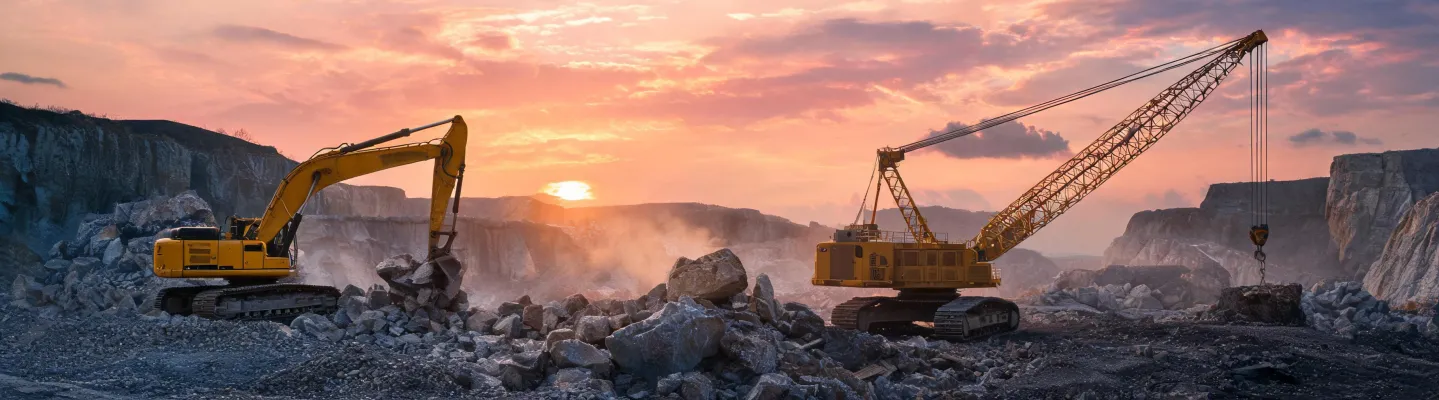
There's no single right answer for a 60 ton Liebherr crane
I'm a senior expediting specialist at an industrial equipment procurement firm. I've handled 300+ rush orders in 12 years, including same-day turnarounds for crane rental and construction clients. When people ask me for the best way to source a 60 ton Liebherr crane, I can't give one answer. The right move depends on whether you're in an emergency, planning a known lift, or keeping a used Liebherr crane running.
When I first started sourcing heavy equipment, I assumed the fastest quote was the one to take. Three delayed deliveries later, I realized speed without verified availability is just a promise. That's why I split these decisions into three scenarios. Read the one that matches your timeline and risk profile first.
The three scenarios:
- Scenario A: You need a 60 ton Liebherr crane now. The project is already moving.
- Scenario B: You're specifying a liebherr crane for a planned project and choosing a ton crane supplier.
- Scenario C: You're maintaining a used crane and deciding between used crane OEM vs private label parts.
Scenario A: You need a 60 ton Liebherr crane now
This is the emergency lane. Maybe a scheduled crane failed inspection, a site access issue changed the lift plan, or a subcontractor dropped the ball. You don't need a philosophy lecture. You need a verified machine and a transport plan.
In March 2024, a client called at 4:40 p.m. needing a 60 ton Liebherr crane for a bridge deck pour 36 hours later. Normal turnaround for that class was 5 to 7 days. We found a supplier with an LTM 1060-3.1 available, paid $4,800 extra in rush transport and mobilization fees on top of the $18,500 base rental, and delivered the crane with 6 hours to spare. The client's alternative was a $50,000 penalty clause and a crew sitting idle.
What I'd do in this scenario:
- Call three ton crane suppliers, not ten. In an emergency, ten quotes create delay. Three serious calls tell you who actually has a 60 ton liebherr crane available, not just a brochure.
- Ask for the crane's current location, configuration, and inspection status. A 60 ton Liebherr crane might be available in theory but stuck across the country. Location is part of availability.
- Verify transport before you celebrate. A mobile crane needs permits, escort vehicles, and route surveys. The machine being free doesn't mean it can legally move tomorrow.
- Lock the lift plan and operator qualifications. According to OSHA (osha.gov), crane operators must be trained and qualified, and equipment must be inspected before use. Emergency doesn't override safety.
Honestly, the biggest mistake in emergency sourcing is treating the crane as the only variable. It's not. Transport, permits, operator, rigging, and ground conditions all decide whether the crane actually lifts on time. I'm not a structural engineer, so I can't tell you whether a specific lift plan is safe. What I can tell you from a procurement perspective is that a cheap crane with no transport plan isn't cheap.
Scenario B: You're planning a 60 ton Liebherr crane for a known project
This is where city crane specifications and supplier selection matter most. You have time to compare, but you also have time to overcomplicate it. A 60 ton Liebherr crane is a versatile class. It's often used for HVAC, steel erection, precast concrete, and industrial maintenance. The Liebherr LTM 1060-3.1, for example, is listed by Liebherr (liebherr.com) with up to 60 t lifting capacity and a 48 m telescopic boom. But the spec sheet is only the start.
City crane specifications usually come down to three trade-offs:
- Dimensions and axle loads: Can it travel on your roads and set up in your available space?
- Boom length and radius: Can it reach the load chart point you need without a bigger crane?
- Counterweight and transport: Can you move it economically between sites?
When you evaluate a ton crane supplier, ask for the actual load chart for your radius, the crane's current inspection documents, and a transport plan. A supplier who only sends a generic PDF isn't giving you what you need. A supplier who asks about ground bearing pressure, site access, and lift radius is probably one you want to keep.
This is also where I'd push back on the idea that every project needs the newest or biggest crane. To be fair, budget matters. If a smaller crane meets the load chart with margin, use it. But the quality of what shows up on site shapes how your client sees you. The crane you bring is your brand on wheels. If it's clean, well-maintained, and correctly configured, clients read that as competence. If it's leaking hydraulic fluid and missing documents, they read that as risk. I think that's a bigger cost than the line item on the quote.
One practical note: this was accurate as of January 2025. Availability, transport rules, and crane specifications change, so verify current data with the supplier and Liebherr's official spec sheets before you commit.
Scenario C: You're maintaining a used Liebherr crane
This scenario is about keeping a used liebherr crane productive. You're not buying a new machine. You're deciding between used crane OEM vs private label parts. This is where a lot of B2B buyers get stuck, and where the wrong choice can hurt your schedule and your reputation.
I've tested six different parts options for older Liebherr cranes, from OEM dealers to private-label aftermarket suppliers. Here's what actually worked. For safety-critical components, OEM or OEM-approved parts were worth the premium. For wear items like filters, hoses, and some electrical components, a reputable private-label supplier can be fine if the specs match and the supplier provides traceability. The problem is when buyers treat every part as a commodity.
After three failed rush orders with discount vendors, we now require a 48-hour buffer for any private-label part going into a crane that's on a critical path. A private-label hydraulic hose that fails during a pour doesn't just cost the hose. It costs the crew, the concrete truck, the client's trust, and possibly the project. Missing that kind of deadline can mean a $50,000 penalty clause. We paid $800 extra in rush fees once, but saved a $12,000 project. That's the trade-off.
How to decide:
- Use OEM or OEM-approved parts for: load-bearing, brake, hydraulic, control, and safety systems.
- Consider reputable private label for: filters, fluids, cab accessories, and non-structural wear items with matching specs.
- Never skip documentation: part numbers, certifications, and supplier warranty terms should be in writing.
To be fair, OEM parts aren't always available fast, and private label isn't automatically bad. The point is risk matching. The more critical the part, the less you should optimize for price alone.
How to know which scenario you're in
Ask yourself three questions:
- What's your timeline? If you have less than 72 hours, you're in Scenario A. If you have weeks or months, you're in Scenario B. If you're maintaining an existing machine, Scenario C.
- What's the cost of failure? If a delay means penalty clauses, idle crews, or safety exposure, prioritize verified availability and quality over the lowest quote.
- Who sees the result? If your client sees the crane or the work it supports, the quality of the machine and parts is part of your brand. In my experience, that's not the place to save the last 5%.
I've handled enough rush orders to know that no single supplier is right for every scenario. Sometimes the right answer is a premium OEM part. Sometimes it's a private-label filter from a supplier you trust. Sometimes it's paying rush fees to move a 60 ton Liebherr crane across two states. The goal isn't to find the cheapest option. It's to find the option that gets the lift done safely, on time, and without damaging the reputation you've built.
Prices and regulations change. Verify current rates, crane specs, and OSHA requirements with official sources and your supplier before making a final decision.

Eric Caldwell is a fleet and component lifecycle analyst covering undercarriages, track rollers, bucket teeth, cutting edges, pins, bushings, attachments, parts support, and telematics. He uses ISO/TS 15143-3 server-based machinery status data alongside measured track-chain pitch growth, roller diameter, tooth-profile loss, joint clearance, operating hours, idle ratio, and fault records. His procurement guides help fleet managers verify fit, wear limits, serviceability, warranty terms, parts continuity, transport cost, data portability, and replacement timing before ranking machines or aftermarket options.