
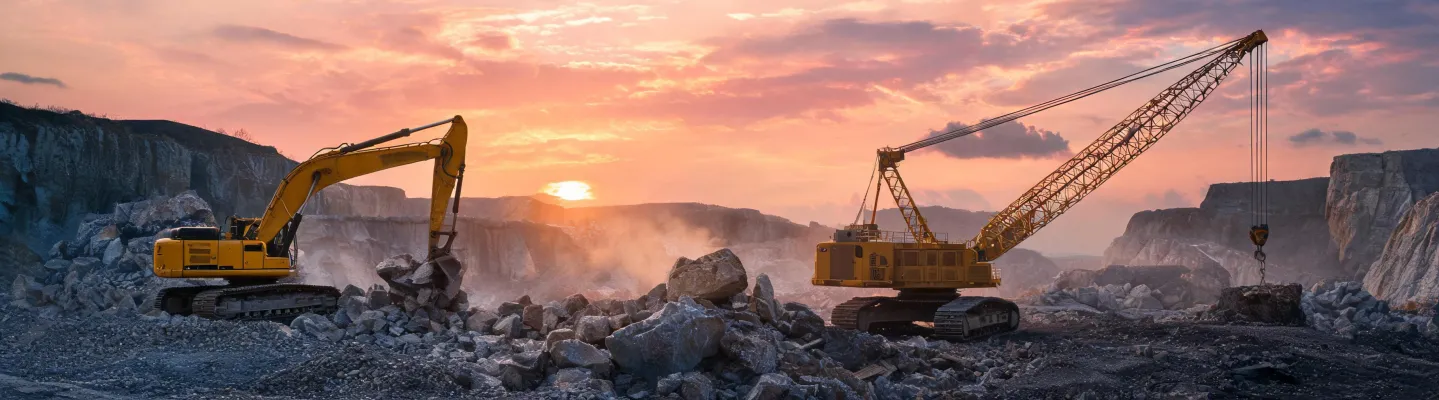
It started with a phone call in September 2022. A mining contractor I'd worked with before needed two mobile cranes for a site in northern Nevada. "Just source the equipment," he said. "Two units, roughly 120-ton rating, and get me a price before Friday."
I did. I also made the mistake that still embarrasses me when I tell this story.
The Quote I Almost Got Away With
I called three crane OEMs. One was Liebherr. The other two were established manufacturers—I won't name them, because they didn't do anything wrong. What I did wrong was compare only the first page of each quote.
The Liebherr crane quote was higher. Not by a little: by about 18%. My purchasing brain filtered out the extras and said "more expensive." I shortlisted the lowest bid and moved on.
Wait, I need to be fair. The Liebherr quote didn't just have a higher sticker. It included site-specific lifting configurations, freight engineering, and a commissioning engineer for two days. I didn't read that section closely. I saw the final number, winced, and mentally moved it to the bottom.
That's the classic mistake I still have on my checklist: comparing totals without comparing scope. In my first year in heavy equipment sourcing, 2017, I made a similar call on a batch of hydraulic excavator attachments. That one cost $8,900 in rework plus a delayed delivery. I thought I'd learned the lesson. I hadn't.
What "Compliance" Actually Means on a Sourcing Form
Here's where the story gets specific, because it's about dozer compliance requirements. No, wait—why dozer? Because the same regulations that apply to crawler tractor dozers also apply to many mobile cranes and other off-road diesel machines. I didn't know that in 2022.
In northern Nevada, the relevant regulations came from the U.S. EPA's off-road diesel engine standards and the California Air Resources Board for any equipment that would later cross into California. The contractor's site was near the state line. The equipment had to meet Tier 4 final emission standards to be registered and operated in that region. Also, OSHA required crane operator qualification and site-specific documentation, and the Nevada Department of Transportation needed hauling permits for the counterweights and boom sections.
I didn't know about any of this. I was asking, "What's the lift capacity? What's the boom length? What's the price?"—the questions I get most often from procurement people. The question I should have asked was: "What's required to get this machine legal and operating on-site?"
According to the U.S. Environmental Protection Agency (epa.gov), off-road compression-ignition engines manufactured after 2014 generally must meet Tier 4 emissions standards. CARB (arb.ca.gov) has even stricter registration requirements. I'm not a lawyer, and regulations change, so verify current requirements before any order. But those rules had a direct cost impact: a machine that wasn't compliant couldn't be operated, regardless of how great its lift chart looked.
The lowest crane OEM quote I'd selected was for a model that was technically compliant at the engine level, but the machine configuration didn't include certain aftertreatment-related sensors required for the California registration directory. I didn't discover that until the crane had already been delivered to the site—or rather, until the third-party inspector flagged it during the pre-start audit.
The Moment I Realized My Mistake
The contractor called me eleven days after delivery. "The inspector says we're missing documents. And there's an issue with the emission control software." I remember sitting in my kitchen with the phone pressed against my ear, thinking: I compared the wrong columns.
The total cost of that mistake:
- $14,300 in regulatory engineering fees to sort out the aftertreatment documentation
- $9,700 in re-inspection and downtime at the site
- $4,200 in additional freight because the original transport plan didn't account for an added counterweight configuration
- Three weeks of delay before the crane could be deployed
So the quote that looked cheaper by $46,000 ended up costing about $28,000 extra on that one order. I don't have hard data on how many procurement teams make this same math error, but based on the conversations I have with other sourcing folks, I'd estimate it's a lot. The pain is real.
Why the Liebherr Quote Kept Creeping Back Into My Head
During the four weeks of fixing the issue, I kept thinking about the Liebherr crane quote I'd dismissed. Not because Liebherr is flawless—no OEM is, and I don't want to write that. But because the quote had included something I now know to be the most expensive line item in any crane sourcing project: requirements planning.
Liebherr's quote had a compliance matrix. It listed the emission standard, the registration status, the transport dimensions, and the estimated permit requirements for the designated operating region. It also specified the number of service technicians available within a 200-mile radius and the lead time for spare parts. I read that document later, after my mistake, and wanted to throw my laptop across the room. The information had been right there.
And here's the strange part. Around the same time, a colleague who had kids mentioned the Liebherr LEGO crane set. It's a Technic model of the LR 13000 crawler crane. I bought one for my nephew—and, honestly, for me. Building it gave me a small glimpse into how much engineering attention goes into the real machine. I know comparing a LEGO set to a 300-ton crawler crane sounds ridiculous. But it made me realize that I had been treating all heavy equipment OEMs as interchangeable boxes with hooks and tracks. They're not.
I'm not saying you should choose Liebherr because of a toy. I'm saying the same obsession with tolerance and assembly that makes a LEGO Technic model work is present in the way Liebherr structures its quotes. The compliance matrix wasn't an add-on. It was the product—in a way. I just didn't know how to read the table of contents.
What I Learned About TCO (and Dozer Compliance)
If you're sourcing any off-road heavy equipment—a Liebherr crane, a dozer, mining trucks, even a skid steer—the wrong unit of measurement is the purchase price. The right one is total cost of ownership, or TCO. This is the part I now teach to every new buyer who joins our team.
TCO includes:
- The OEM's base price, including standard and optional configurations
- Compliance engineering: emission certifications, regional registries, safety documentation
- Transport, rigging, and permits for the actual route and site
- Operator training, especially for cranes where OSHA 1926 Subpart CC applies
- Spare parts lead times and technician availability during the machine's life
- Resale value and the OEM's documentation history for future transfers
I'm not going to pretend I have perfect data on every one of those categories. I don't. Looking back, I should have asked each crane OEM for a TCO summary in writing—and not accepted a simple "we handle compliance" over the phone. Given what I knew then, though, my mistake was understandable. That doesn't make it less expensive.
One thing I do now: before any sourcing decision, I send each OEM a one-page questionnaire with specific compliance questions. For dozers, that means asking about the machine's exact EPA Tier rating, CARB registration status, DEF and DPF requirements, and the documented process for updates. For cranes, I add the hoisting and load test certification, the operator manual version, and the wire rope inspection records. It sounds like a lot. In practice, it takes one meeting to compile. It would have saved me $28,000.
The Checklist I Wish Someone Had Given Me in 2017
If this story helps one person avoid my mistake, great. Here's the minimum viable checklist for crane sourcing—and by extension, for any off-road equipment order:
- Verify the engine's emission tier and its registration status in the operating state or province. Don't take the salesperson's assumption; ask for the official certificate.
- Ask about transport dimensions, weights, and permit lead times before the commercial quote, not after the order.
- Identify which local regulations apply to the machine's operation. For cranes in the U.S., that includes OSHA 1926 Subpart CC. For dozers, check the federal and state environmental agency requirements.
- Ask the OEM for a written compliance matrix or request one in a separate document.
- Compare quotes based on scope, not final price. If an OEM doesn't list scope items clearly, ask why.
- Budget for commissioning and training. The cheapest crane is not cheap when it sits idle because nobody is certified to run it.
I've now compiled 47 potential errors on our team's sourcing pre-check list. We've caught a few mistakes before they became invoices. The list isn't perfect. But it exists, and that's the point.
I don't have hard data on how much money the list has saved us, because we haven't tracked every near-miss. I can tell you this: since I started using it in Q1 2024, not a single order was delayed by a compliance discovery. That's a record I intend to keep.
If you're wondering which OEM I'd call first for a crane order now—that's probably obvious. But I'd call them with a document in hand, ready to talk TCO. The Liebherr crane might not win on sticker price. The Liebherr quote might not even be the fastest to evaluate. But after my 2022 mistake, I've learned to ask what the price is buying. That's a question no spreadsheet can answer for you.
Charlotte Avery is an earth-moving machinery analyst covering excavators, mini excavators, loaders, skid steers, dozers, graders, compactors, and attachments. She uses ISO 6165 machine classification and ISO 20474-1 safety requirements while examining operating mass, rated payload, breakout force, ground pressure, stability, visibility, guarding, and attachment compatibility. Her work helps contractors and fleet buyers match machine size, undercarriage, transport limits, and protective features to terrain, duty cycle, and jobsite access.