
-
1. What does a Liebherr 500 ton crane actually tell you?
-
2. Tower crane or mobile crane: which one should you choose?
-
3. What should I look for in an overhead crane manufacturer?
-
4. How do you choose a bulldozer for wholesale without getting burned?
-
5. Is a used Liebherr crane a smart buy?
-
6. How important are spare parts and dealer support?
-
7. What's the one question most buyers never ask?
People think my job is about fixing machines. It's not. In my role coordinating emergency service for heavy equipment dealers, I spend more time fixing bad purchase decisions than broken cranes. A buyer calls at 4:30 on a Friday, says their Liebherr 500 ton crane is not working for the job, and asks: 'what now?' That's why I put together this FAQ. It's the questions I wish customers asked before signing, not after.
I've been doing this for about 9 years and handled 300+ rush orders, from overnight crane parts to dozer delivery screwups. This is practical, field-level advice. Not the brochure version.
Here's what we'll cover:
- What a Liebherr 500 ton crane really tells you
- Tower crane vs. mobile crane decisions
- How to evaluate an overhead crane manufacturer
- How to choose a bulldozer for wholesale fleets (or just one machine)
- Spare parts, dealer support, and the question nobody asks
1. What does a Liebherr 500 ton crane actually tell you?
It tells you the rough class, not whether the crane can do your job. The LTM 1500-8.1 is a common Liebherr 500 ton crane, but its real capability depends on the load chart at the radius you need, the counterweight configuration, the boom length, and ground conditions. I've seen people buy a 500-ton machine because the brochure said 500 tons, then discover the load at 30 meters is only 40 tons. That's normal. It's also why I tell buyers to compare load charts, not max lifts.
Keep this in mind: a machine's rated capacity is not a promise. It's a starting point. According to Liebherr's official product information (liebherr.com), the LTM 1500-8.1 is rated at 500 tonnes, but max capacity at short radius doesn't mean the crane will do the same work at full extension. Verify current specs with your dealer before planning around it.
If your job requires lifting 100 tons at 50 meters, a 500-ton class crane might still not be enough. Get a lift plan before you buy. (This is the advice I give before looking at rental costs, because crane rental is unforgiving.)
2. Tower crane or mobile crane: which one should you choose?
Liebherr builds both mobile and tower cranes, so this isn't a brand question—it's a site question. If you have a tight, tall site and the crane will stay for months, a tower crane often makes sense. If you need setup speed and flexibility, a mobile crane is usually better. But don't choose the crane type first—choose the manufacturer first. A good tower crane manufacturer will ask about site layout, max jib radius, freestanding height, and how many hook hours you actually need. If they don't, that's a warning sign.
I can only speak to the service side of things. If you're buying a tower crane for a 10-year installation, the calculus might be different. But I lean toward manufacturers with local parts stocking and erection teams they can actually schedule. A tower crane that sits in a crate for three weeks because the manufacturer can't send an erector costs more than any price premium.
For tower crane specifically, ask about climbing time and how many operators are trained. The best crane in the world is useless if the crew can't run it safely. (This was true as of January 2025, at least.)
3. What should I look for in an overhead crane manufacturer?
Honestly, a lot of buyers skip this because they assume an overhead crane is a low-stakes purchase. It's not. When you evaluate an overhead crane manufacturer, ask about duty classification, lift height, span, and service access. Also ask about the electrical components. If they can't tell you the environmental rating of the control panel, that's a problem.
One thing I've learned: the cheapest quote is rarely the cheapest lifetime cost. I'm somewhat skeptical of manufacturers who won't share service documentation before you buy. In my first year, I made the classic specification error: I ordered a crane based on max capacity rather than actual duty cycle. Cost me a painful redo. (This was back in 2021.)
Good overhead crane manufacturers should be able to give you a lifecycle cost estimate, including spare parts. If they can't, ask why. The answer will tell you a lot about how they treat customers after the check clears.
4. How do you choose a bulldozer for wholesale without getting burned?
The word 'wholesale' usually means someone is buying multiple units, and that changes the questions. Don't just focus on the unit price. Ask about parts commonality across the fleet, delivery timelines, warranty administration, and whether the machines are configured identically. A fleet with three different blade types is a maintenance headache nobody budgets for.
I'm not saying skip price negotiation. Just don't let per-unit savings override support and commonality. One machine down in a fleet of five means four are carrying the load. In a real job, that math matters more than the discount.
And if you're a smaller buyer thinking about a single machine? Good suppliers won't treat you differently. When I was starting out, the vendors who took my modest orders seriously are the ones I still trust for bigger ones. Small doesn't mean unimportant; it means potential.
5. Is a used Liebherr crane a smart buy?
It can be, but it depends on support. A well-maintained older Liebherr crane can be a workhorse. But if the local dealer can't get parts in a reasonable time, your savings disappear fast. I've handled rush orders where a single control module took three days to source because the machine was older than the dealer's inventory system. (Unfortunately, that's not rare.)
If you're looking at a used 500-ton crane, do two things: get a full service history and talk to the dealer's service department before you negotiate price. Find out how long common parts take to arrive. Then decide. Don't hold me to this, but I'd rather have a 20-year-old crane with good dealer support than a new one from a manufacturer you can't reach.
6. How important are spare parts and dealer support?
At least as important as the machine itself. In March 2024, I had a contractor call at 6 PM with a failed part on a Liebherr crane the next morning. Normal lead time was four days. We found a part at another dealer, paid expedited freight, and had it onsite by 6:30 AM (thankfully). Cost extra, but the alternative was a $50,000 penalty clause. I tell people: buy the dealer network before you buy the equipment.
This worked for us, but our situation was a mid-size dealer with an established network. If you're a one-machine owner-operator in a remote area, the calculus might be different. Ask about parts stocking before you sign.
Since that March 2024 call, our policy is to confirm parts availability before promising a fix. It sounds obvious, but in an emergency, the obvious steps are the first ones people skip.
7. What's the one question most buyers never ask?
Ask for the service manager's phone number. Not the salesman's—the service manager's. Then call them and ask: 'If this machine goes down on a Thursday, what happens?' The answer tells you more than any brochure. If they stumble, you're not buying a machine; you're buying a promise that might not be kept.
I've tested this with countless manufacturers. The good ones are happy to give you a direct line. The ones who hesitate are usually the ones who'd rather sell than support.
This applies to every equipment category, not just Liebherr cranes. Whether you're buying one bulldozer or a full fleet, support answers are real answers.
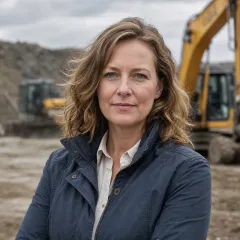
Charlotte Avery is an earth-moving machinery analyst covering excavators, mini excavators, loaders, skid steers, dozers, graders, compactors, and attachments. She uses ISO 6165 machine classification and ISO 20474-1 safety requirements while examining operating mass, rated payload, breakout force, ground pressure, stability, visibility, guarding, and attachment compatibility. Her work helps contractors and fleet buyers match machine size, undercarriage, transport limits, and protective features to terrain, duty cycle, and jobsite access.