
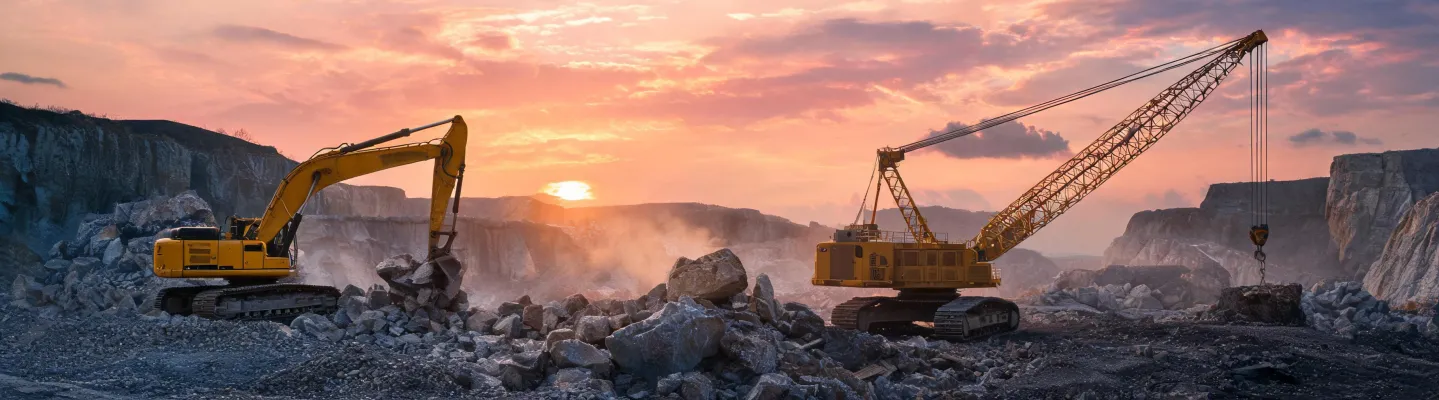
Last April, I watched a 500-ton Liebherr crane sit in our yard for three days while it should've been on a flatbed heading to a wind farm project in North Dakota. The customer's project manager called me every day, sometimes twice. The site superintendent was telling our sales director the whole schedule was gonna slip. And honestly? I'd make the exact same call again.
Here's the thing nobody tells you about quality work in heavy equipment: the decisions that matter most are the ones the customer never sees. When they do see them, it's usually because something got delayed. This is one of those stories.
How the order started
I'm the quality compliance manager at a heavy equipment distributor that carries Liebherr in the upper Midwest. I review every machine before it reaches a customer—roughly 200 units a year. I check the purchase order, the factory build sheet, the load charts, the accessories list. I've rejected about 7% of first deliveries in 2024 for spec gaps. Mostly small stuff. But the small stuff is where big problems start.
In January 2024, we signed a contract for a wind farm installation. The spread included a 500 ton Liebherr crawler crane to set the nacelles, a used 200-ton crawler from our used crane catalog, and two electric hoists under our hoist wholesale program. It was the biggest single order our branch had handled in three years, and it came with a hard weather window. If the big crane wasn't on site by the end of April, tower erection could slip into the fall wind season.
So when I tell you we held that crane on purpose, I want you to understand what it cost. It wasn't just a delay. It was a delay with a deadline attached.
The inspection that found the problem
The 500-ton Liebherr crane came off the lowboy on a Tuesday morning. I walked it with our standard acceptance checklist. Serial numbers matched the build sheet. Boom sections were all accounted for. Pins, lacing, operator's cab, swingaway extension—all fine. Then I got to the counterweight.
The build sheet called for ten counterweight plates at 200 metric tons. The machine had twelve plates at the same total weight. The difference was in the plate sizes and how they were stacked. I want to say the spec called for 50-ton plates across the top and the machine showed up with 30-ton plates instead, but don't quote me on that exact detail. What matters is the arrangement didn't match our order.
Some people hear "same weight" and think it's a non-issue. It isn't. A crane's load chart is certified for a specific configuration. Liebherr's technical documentation (liebherr.com, accessed January 2025) presents load charts on a per-configuration basis, and OSHA's construction crane standard (29 CFR 1926.1417) requires cranes to be operated according to manufacturer specifications and limitations. Change the counterweight arrangement and the published chart doesn't apply to the machine as it's sitting. That's not paperwork pedantry. It's a stability calculation.
The most frustrating part was the pushback. The shipping crew said, "Same weight, what's the difference?" The customer's project manager said, "Nobody's gonna count plates on a jobsite." And for a minute, I had to check myself. Was I being rigid about a detail that didn't actually change the safety margin?
I'm not a lift engineer, so I can't speak to the structural calculations behind the chart. What I can tell you from a quality inspection perspective is simpler: if the chart says configuration A and the machine is configuration B, then the chart is no longer the contract between the machine and the ground. That's the whole reason the check exists.
The decision to hold
Here's the trade I was weighing. The upside of shipping it: the crane arrives in time, the customer stays happy, we don't eat a second transport cost on a tight margin. The risk: if the configuration gap meant something worse than we'd caught, someone would be lifting a 90-ton nacelle on a chart that didn't match the machine. I kept asking myself—is a two-week weather window worth that phone call on a Friday night?
Inside our own office, I got some pressure too. The sales director asked if I was sure, because getting a transport slot for a second crane move is a nightmare and the customer had a legitimate schedule concern. I told him I couldn't be 100% sure the plate arrangement was a safety problem in a load-bearing sense. But I could be sure about one thing: I wasn't going to sign a release on a machine whose chart didn't match its configuration. That's the whole job.
There was also a quieter version of this decision, and I won't pretend it wasn't there. We could've shipped the crane, corrected the build sheet later, and nobody would've been the wiser. That's the path a lot of companies take. I've seen it work out more often than not. But it only has to go wrong once, and "almost certain nobody will notice" isn't a safety argument.
We held the crane. I called our Liebherr regional rep that afternoon, and their quality team confirmed the configuration didn't match our order. A service crew came out two days later and swapped the plates. It took three days total—or rather, three and a half, counting travel time and the recheck I did before signing the release.
What the delay actually cost us
The customer was not happy about the delay, and I don't blame them. They had a weather window, and three days was a real piece of it. But when we walked them through the documentation—the build sheet, our inspection photos, the manufacturer's confirmation—the conversation changed. They didn't like the delay. They couldn't argue with the logic.
The crane went to work with the correct configuration and the correct chart, and it stayed on that project through the whole erection season. That wind farm became one of our strongest references. In Q3 2024, the same customer came back for another crawler and a batch of hoists from our wholesale line. The sales team told me the three-day delay came up in the negotiation—not as a complaint, but as the reason they trusted our verification process. One of their supers told a subcontractor that we're "the distributor that checks the counterweights." That's the best compliment I've gotten in this job.
The lesson about quality and brand
This is where the quality lesson connects to the business side. Most purchasing conversations in this industry start with price data. We publish a loader wholesale cost guide every quarter, and it's one of our most-shared pieces of content. People use it to compare line-item prices. But in 2024, we tracked eleven loader deliveries where the cheapest quote was the most expensive one by the time rework and downtime were counted. A price list doesn't tell you what's actually inside the machine, or what it costs to fix a machine that arrives with the wrong configuration. The same logic runs through everything we wholesale, hoists included.
I also came away with a clearer view of used equipment. It gets a bad rap, and some of that is deserved. But the problem usually isn't the machine—it's the gap between what the listing says and what's been verified. A used crane catalog entry tells you the year, the hours, and the boom length. It doesn't tell you whether the counterweights match the chart on the machine. That's a verification problem, not a used-versus-new problem. If you're buying from a listing, verify the same way you'd verify a new unit, because the cost of a mistake is the same.
Here's what I keep coming back to. Brand perception in this industry isn't built on marketing. It's built on the decisions nobody sees. When we held that delivery, the customer didn't see us save money or hit a schedule. They saw us eat a cost to be right. The three days cost us some schedule buffer, but they bought something stickier: the customer's belief that when we stamp a machine as ready, it's actually ready.
I've seen this pattern play out enough to trust it. But when I say "enough," I do not mean a couple of examples. I mean across 200+ machines a year, the ones that cause problems are the ones nobody checked. So if you're putting together a heavy equipment package—a single crane or a full fleet spread—don't stop at the price and the delivery date. Verify the configuration. Check the load chart against the build sheet. Count the plates. It might cost you three days. As of January 2025, I can tell you from our record: it's usually worth it.
Regulatory note: OSHA requirements cited as general reference. Verify current standards at osha.gov.

Charlotte Avery is an earth-moving machinery analyst covering excavators, mini excavators, loaders, skid steers, dozers, graders, compactors, and attachments. She uses ISO 6165 machine classification and ISO 20474-1 safety requirements while examining operating mass, rated payload, breakout force, ground pressure, stability, visibility, guarding, and attachment compatibility. Her work helps contractors and fleet buyers match machine size, undercarriage, transport limits, and protective features to terrain, duty cycle, and jobsite access.