
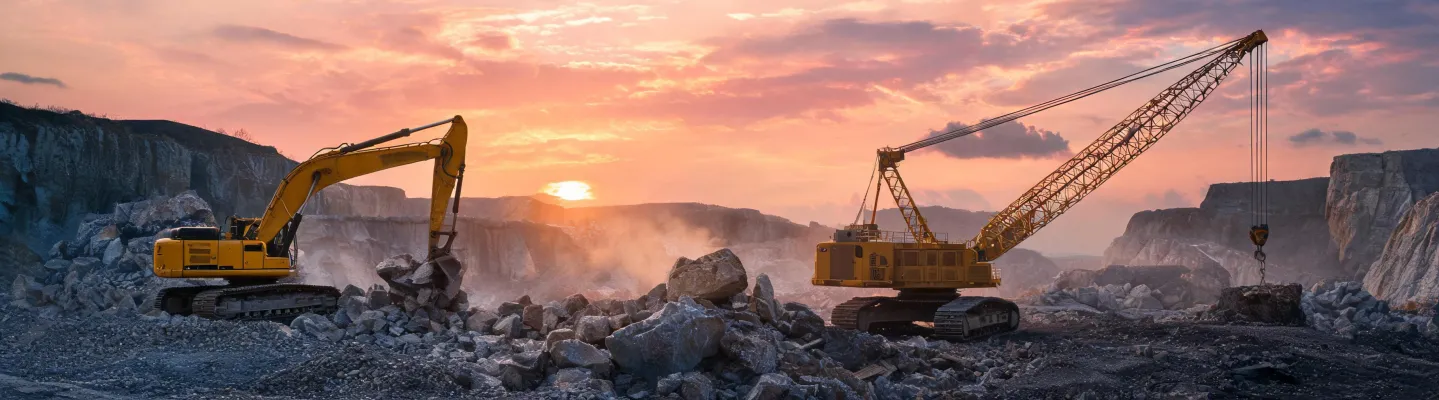
I’m the office administrator for a 140-person construction company. I manage roughly 60 to 80 orders a year across eight or nine vendors, and I report to both operations and finance. I don’t operate heavy equipment. But in March 2024, I became the person responsible for buying a used Liebherr crane.
The project manager sent an email to our CFO: the company had a long infrastructure job starting in Q3, and the rental costs on a crawler crane would eat the margin. His math said owning would pay for itself in about fourteen months. The CFO replied, “If the math works, make it work.” The next morning, I had a new unofficial title: Procurement Person Who Knows Nothing About Cranes.
I’m not going to pretend I did everything right the first time. I didn’t. But the process worked, and I ended up with a dozer distributor buying guide that our operations manager still uses. This is how it happened.
Why We Started With Liebherr Cranes
The short answer: every site supervisor we asked said the same thing. If budget allowed, they’d take Liebherr cranes over almost anything else. The brand recognition mattered too. In infrastructure bids, the equipment list is visible to the client, and a familiar name can give confidence before you even talk numbers.
But a brand name is not a specification. It took me about 40 days and 20 supplier conversations to understand that. A Liebherr crane model number tells you the family, not the exact configuration. The same model can have different booms, winch packages, counterweight options, and transport requirements. The brochure might say “maximum lifting capacity,” but that number usually applies to one very specific setup. If a seller can’t show you the load chart and a complete service history, the name on the side doesn’t tell you much.
I also learned that Liebherr’s official documentation is your friend. The spec sheets list capacities at different radii, not just one number. Once I started asking sellers for those charts before asking for price, the tone of the conversation changed. Serious sellers sent them immediately. The others made excuses.
The Search for a Mobile Crane Supplier
The first thing I typed into Google was “mobile crane supplier.” That was a mistake, mostly because the results were all over the place. Some were authorized dealers. Some were rental fleets selling off old machines. Some were brokers who didn’t own any equipment at all. I assumed they were basically the same. Didn’t verify. Turned out the word “inspected” meant very different things depending on who was talking.
I learned to ask three questions before asking about price:
- Are you an authorized dealer for the OEM, or an independent seller?
- Can you provide the complete maintenance history from day one?
- Is the machine in the listing photos the exact machine for sale?
That last one sounds obvious, but we saw a used dozer listing that used a manufacturer’s stock photo. The actual machine had a different attachment configuration. If I hadn’t asked, we would have driven six hours to see something else.
When you’re looking at a bulk used crane deal—say, one crawler crane plus a smaller support crane—you’re not really buying one machine. You’re buying several decisions bundled together. The price might look like a bulk discount, but each machine has its own service history, transport cost, inspection status, and risk profile. The cheapest combo quote isn’t always the lowest total cost.
I went back and forth between a national authorized dealer and an independent regional supplier for two weeks. The national dealer offered a warranty and a certified inspection. The regional supplier was about $85,000 cheaper and could deliver two weeks sooner. On paper, the regional supplier made sense. But my gut said after-sale support mattered more. I chose the authorized dealer.
Even after signing, I kept second-guessing. What if I had overpaid? The two weeks between signing and delivery were stressful. But when a sensor issue showed up on the first job, their service team had a technician on site in two days. That response time was worth more than the $85,000 difference in price. (Should mention: the project manager was patient. Mostly because he was also nervous.)
The Dozer Distributor Buying Guide I Built Along the Way
The crane search was only half of it. The same job required two dozers, and that’s where I ended up writing what I now call my dozer distributor buying guide. It’s not a formal manual. It’s a checklist I built after nearly getting burned twice.
If you look for a dozer distributor buying guide online, you’ll find a lot of content written by sales teams. Mine is written from the buyer’s side. The short version:
- Talk to the service manager, not just the sales rep. The sales rep will promise anything. The service manager will tell you what parts actually cost and how long they take to arrive.
- Ask for hours and maintenance records before you look at photos. Photos tell you about cosmetics. Records tell you about condition.
- Verify where the machine worked. A dozer used in a gravel pit wears differently from one used in highway earthworks.
- Ask who supplies parts after the sale. Some distributors are really just brokers. If they can’t get OEM parts in a reasonable time, you’re paying for downtime, not saving money.
The hardest lesson was following my own checklist. I almost skipped the “talk to the service manager” step because the sales rep was friendly and the price was good. I made the call anyway. Good thing: the service manager mentioned that the dozer had spent two years in a saltwater environment. That wasn’t in the listing. The price suddenly looked very different.
I want to say the final equipment package came in somewhere around $1.2 million, but don’t quote me on that. My memory for exact figures isn’t great, and there was a lot of line-item negotiation. What I remember clearly is that the dealer relationship mattered more than the machine spec.
A supervisor once told me, “You don’t buy the machine. You buy the dealer.”
I thought that was just a nice saying. Then I watched a warranty issue disappear because our dealer could pick up the phone and get the OEM involved directly.
What I’d Do Differently Next Time
First, I’d write down our actual project requirements before calling anyone. I didn’t. I let salespeople describe the problem before I could explain it to them, and that put me on the back foot.
Second, I’d ask for dealer references earlier. I asked eventually, but only after the contract was nearly signed. The references gave us useful information about long-term support, and that information should have shaped our shortlist from the beginning.
Third, I’d budget more time for the research phase. The whole process took about six weeks. I expected two. A lot of that time was waiting for documents—certificates, service histories, load charts. If I had started earlier, the decision would have felt less rushed.
I’ll be honest: I didn’t sleep well the night before the crane arrived. Large used equipment purchases don’t come with a return policy. But the machine did what it was supposed to do, and the company saved more than the rental cost in the first year. If the math works, the nerve-wracking part is worth it.
Charlotte Avery is an earth-moving machinery analyst covering excavators, mini excavators, loaders, skid steers, dozers, graders, compactors, and attachments. She uses ISO 6165 machine classification and ISO 20474-1 safety requirements while examining operating mass, rated payload, breakout force, ground pressure, stability, visibility, guarding, and attachment compatibility. Her work helps contractors and fleet buyers match machine size, undercarriage, transport limits, and protective features to terrain, duty cycle, and jobsite access.